LISTEN OR WATCH

POINTS OF CONNECTION


Contact Jim:
Search this blog

Entries in new heart (19)

Tuesday
Jan262010

Trusting your heart is the biblical thing to do.

It's o.k. to trust your heart now.  In fact, Jesus wants you to.

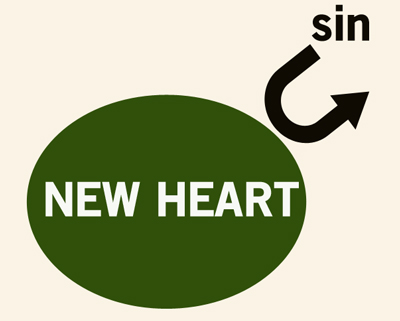
Your heart can be trusted now because it is no longer 'deceitfully wicked.'  If you follow Christ, it would be wrong to mistrust your heart:  It would be at cross-purposes with what God is doing in your life to constantly hold your desires under suspicion.

I recently asked a group of men to raise their hands if they thought that trusting their hearts was the right thing to do.  About a third of the hands went up.  The majority thought that holding their heart under suspicion was the biblical thing to do.  As we unpacked the truth of their new hearts, given to them when they said 'yes' to Jesus, we exposed the debilitating assumptions they were taught about their hearts.

I explained that within the new heart Jesus gave them came new and noble desires -- and that dismissing those desires as selfish or inherently wicked would prevent them from doing certain things like:

  • discovering their unique calling
  • loving God and loving each other


But not all desires are created equal

There are, of course, competing desires that can be whispered to us, but those desires are not ours.  They are either whispered by the Enemy, or our culture, or our 'flesh' (which is no longer us, not our real self);  but those desires are not our desires.  False desires are like thorns lodged in the skin -- they are embedded in our bodies, but not of our bodies.  The thorns cry out for our attention, but our health lies in the vitality already present in our bodies.  Our concern must focus on what's most alive and already present within us.  That's where God focuses his energy.

Ask God to reveal the desires of your heart
Stay with the process.  It's what he's up to in your life.  Trusting your heart is biblical.

Monday
Jan112010

Being 'accepted' by God isn't enough.

One of the members of The Good and Noble Heart community I moderate asked a great question.  The core of her question goes to real the offer of Jesus.  Here's her question:

What exactly did Jesus accomplish for us? I really believe that He brought us to a place of being able to be with the Father, unrestricted and free. That's how I life my everyday life with Him. But I really don't know how to see myself...am I really good now and therefore can go to the Father, or still the same old me, but completely accepted through Christ's dying on the cross, and that being accepted as I am gives me the hope and strength to be able then to change.

Her confusion is understandable and common to many Christians:  Am I merely accepted by Jesus (which is a beautiful thing in itself) but am still essentially the same person I was before I met him; or did he do something to me -- making me truly good and pure of heart? 

The trouble with seeing ourselves as only forgiven and accepted is that is doesn't solve the root problem -- a diseased and fatally-incapacitated heart.  If Jesus were to 'accept' us without giving us the capacity to love and relate well to him, we would not be able to live or love as he did -- unable to fulfill the command to "love God with all your heart...."  It would be a cruel and unfair expectation on God's part. 

Further, we would be debilitatated and diminished in our capacity to love others:  "Love one another as I have loved you." You can't love like Jesus unless you have his heart.  And that's exactly why his offer includes acceptance ... and a gloriously new heart.

The salvation Jesus offers is a rescue of the heart. It has to be.  There is no loving and living well without a reborn, alive and supernaturally-vibrant heart. 
...................................................................................................

Is this understanding of the Gospel what you were taught?

Monday
Nov302009

Podcast - RECOVERING OUR DESIRE

Recovering our desire -- Jim is a guest again on Joel Brueseke's Growing in Grace Together  podcast.  They talk about our fears to trust our desires, because we've mistrusted our hearts.  They also talked about the various sources of desires and the consequences of not trusting the desires that are in our new and good hearts.

Here's Joel's podcast site

.............................................................................

Get the podcasts on iTunes here.

Monday
Nov232009

LISTEN NOW --new podcast - 'The Heart and the New Covenant'

Joel Brueseke, who hosts the Growing in Grace Together podcast, is a good friend and a guy who really gets the good and noble heart.  Joel interviewed me today for a two-part series.  Here is part one.

Listen in for some great conversation about why Christians tend to walk around in guilt and shame, and why there seems to be such a focus in the church on behavior management and sin management - and how living with a New Covenant mentality rather than an Old Covenant mentality, as well as a proper view of the new heart, will overcome all of that.

Monday
Nov162009

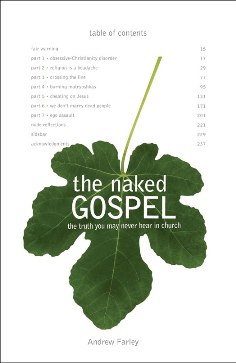
LISTEN NOW: 'The Naked Gospel' interview with Andrew Farley

Andrew and I talked about his fantastic new book, The Naked Gospel - the truth you may never hear in church.  Find out what Andrew says about our new identity and freedom.  It really is a lot better than we've been told.

  • Should Christians really obey the moral law in the Ten Commandments?
  • Do we really have pure and good hearts - the very same that Jesus had?
  • Can Christians trust their hearts?

The answers may surprise you!

...................................................
Click player below to listen.


As always, feel free to leave your comments below!

Friday
Nov132009

LISTEN 'live' tonight -- podcast special guest Aida Calder talks about spiritual abuse and the new heart

Aida Calder is the blogger who writes the Forgetting the Former Things blog, which has an international audience.

Join us tonight as we talk about her journey, the new heart, and spiritual abuse.  Listen 'live' at 6:30 pm EST or download the podcast shortly after the show.

CLICK HERE TO GO TO TONIGHT'S PODCAST PAGE.  (I use Blogtalk radio when I have podcasts guests.  You can even ask for show reminders at the show's page.)

......................................................................................................

As always, feel free to leave your comments below.

Wednesday
Oct072009

Changing our nature...what has already occurred within

Why does God insist on making us loveable, lovely, whole?  For certainly he has always loved us, even when we were unlovable; yet this wasn't enough for him, says C.S. Lewis:

"...it is natural for us to wish that God had designed for us a less glorious and less arduous destiny; but then we are wishing not for more love but for less."  - C.S. Lewis, The Problem of Pain

"We may wish, indeed, that we were of so little account to God that He left us alone to follow our natural impulses - that he would give over trying to train us into something so unlike our natural selves:  but once again, we are asking not for more Love, but for less."  -- C.S.  Lewis, The Problem of Pain


I want to answer Lewis here (not knowing how he might respond)...   In order to fashion us into the supernaturally glorious creatures he desires and loves into wholeness, God indeed did change our natural selves, our natural impulses -- from unlovely to noble and good.  This he did at the level of the heart. 

We need not wait for heaven for this.  It has already happened.  It is the promise of Ezekiel 36:26 fulfilled (and in other places throughout Scripture).  We now grow out of that new and noble nature with its noble impulses.  We practice our new nature.  Discipleship is learning how to live from that good heart.

Thursday
Sep242009

Staying with the message of the new heart

Quite frankly, it's difficult to believe I have a good heart sometimes. The evidence against it seems too strong.

Lately, there's been almost an unseen pull downwards, a drain-circling suck towards hopeless futility.  That dark undertow almost got me to draw some fatal conclusions about my own heart.  That pull is towards shame:

I've blown it with my kids a lot lately;  not given myself to my wife as she needs.  I'm actually craving the goodness of Jesus and his choices, begging him to give me his own maturity.  (If you think holiness is hard, try out your favorite addiction or uncontrolled craving for a while.  That's harder to live with.)

In these moments, we have two choices:  fatalism or freedom:

  • Fatalism says:  I am the sum of my failures.  My heart cannot be good -- just look at the evidence against it.
  • Freedom says:  My heart is my hope.  I am a new creation (my heart is now supernaturally restored by Christ.)  Despite the external evidence, there is a new internal reality.  My failures are no longer the truest me.  (Even the apostle Paul says this - Romans 7:20)


  • You can't go by your failures.
  • You can't go by what others think of you.

  • You may not even be able to go by what you've been told by church leaders in the past.

Stay with the truth:  your heart is good now.  Jesus made it so.
......................................................................................................

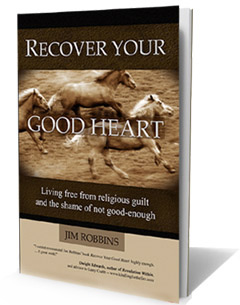
To understand your new heart more, Recover Your Good Heart -- Living free from religious guilt and the shame of not good-enough unpacks what Scripture says about your new heart.

Or you can start with the FREE e-book I wrote:  click here.

Monday
Sep212009

A better way to read the Old Testament - without shame

For decades, the manner in which I read the Old Testament only furthered my shame.
 
I had forgotten to make the critical shift from the Old Way to the New Way--  the old heart to the new heart.  For example, if you read an Old Testament passage like the one below, and forget that something has changed inside you as a result of Christ's work, what would you feel?

"Create in me a pure heart, O God, and renew a steadfast spirit within me."  - Psalm 51:10

My reaction would be:  "Wow, maybe I should be feeling what David is here; I guess I'm supposed to be confessing my sin, examining my selfish heart and repenting about something.  It sounds pretty spiritual and pretty important.  What, exactly, am I supposed to be feeling bad about?  I'm not sure, but I'd better get to work on this repenting thing and ask God to fix my heart."

The problem with that sort of reaction is that it is out of date.  It is an Old Covenant response to a problem that was solved for you in the New Covenant.  Meaning....David's cry for a clean heart has already been answered in the work on Jesus for you.  You've been given a new and pure heart already because you said 'yes' to him.  (Ezekiel 36:26 -- "I will give you a new heart and put a new spirit in you...") 

As we read the Old Covenant, we must now read it from a new heart perspective (you now have a clean heart that does want what God wants).  We make the shift from guilt and shame...to restoration and freedom of heart.

.................................

For more on this, my book Recover Your Good Heart goes into more detail on what Scripture says about our new hearts.

Wednesday
Sep162009

Free e-book from Jim - "THE GOSPEL OF THE HEART"

I'm making this e-book free of charge.  Download or share it as much as you want.
This short e-book exposes the false gospel that manages the externals and sabotages our hearts.

E-Book-The Gospel of the Heart-Author Jim Robbins


Thursday
Jul162009

"A Better Way to Relate to God - Part 2" - podcast archives 


”A Better Way to Relate to God - part two - Better Assumptions” 9/6/07

Many of us have been taught to relate to God with wrong assumptions — particularly assumptions about the heart (will, spirit) of a Christian. For example, are we really “Just sinners, saved by grace?” Are we really “prone to wander?” Jim continues to explore some more accurate, hopeful assumptions Christians can have about their heart as they relate to God.

Wednesday
Jul082009

Hearing the podcast with Darin Hufford -- solution

Click here to hear the interview.

Darin is the author of The Misunderstood God, and the creator of The Free Believers Network. We talked about his book, how religious thinking (vs. the Gospel) has distorted love, and what it means to be a free believer.


Friday
Jun052009

New podcast: "A truer authenticity"

" A truer authenticity:"  6/5/09
Grace without restoration is cruel, like releasing a man from prison without giving him new desires and strength.  Grace must go beyond forgiveness (pardon) to the giving of a new and supernaturally-good heart.  Otherwise, it is stunted grace.

Simply seeing ourselves as a miserable mess - yet forgiven- doesn't help a person in the long run.  We need a new kind of "real."  A new authenticity.

Loading glitch:  My apologies to those who've already tried to listen to the podcast and found it got cut off half-way through.  I've now reloaded it and it should play in its entirety.

Monday
May112009

Misguided "authenticity"

Here's a quote from a missional church leader I have a great deal of respect for.  However, notice his self-description:  Is it biblical?...meaning, is it a true and accurate description of his identity in Christ?

I consider myself as the most miserable of all human beings, covered with sores, foul, and guilty of all sorts of crimes committed against my King; moved by sincere remorse I confess all my sins to him.  I ask him pardon and abandon myself into his hands so he can do with me as he pleases.  Far from chastising me, this King, full of goodness and mercy, lovingly embraces me, seats me at his table, waits on me himself, gives me the keys to his treasures, and treats me in all things as his favorite; he converses with me and takes delight in my countless ways ....Although I beg him to fashion me according to his heart, I see myself still weaker and miserable, yet even more caressed by God.

There's certainly a lot of grace here, but little restoration.  (At least, not mentioned here.)  What kind of God would pardon a person, then refuse to change them at the most basic level (the level of the heart), so that they need not repeat those crimes; and in fact, no longer have it in their nature to do so?

In fact, God has already met this person's longing to "fashing me according to his heart"  ..."I will give you a new heart."  (Ezek. 36:26).  That new heart is pregnant with new life, new desires, and a new will.  How else would he be able to relate well, if not for a transformed heart?  Sure, it will take time to learn to live from that new and supernaturally good heart -- but that will come. 

I'm concerned with a brand of 'authenticity' and 'realness' out there that takes grace seriously ("You're forgiven and loved"), but is unaware of the gracious gift of a new and radically good heart.  These attempts at being real are noble and certainly well-intended, but have missed the core of the New Covenant promise of a new heart -- a heart on which the ways of God are now written.  Why do we keep rehearsing our mess?

We must be urged to make the shift from external and behavioral compliance to internal and supernaturally-capable desire to love and relate well.  Most Christians are unaware that that shift has already happened ...within their own hearts. The desire and the ability to relate well and love wholly are there.

Let's bring this good news back to the center of our teaching, preaching and relating.  Only then will we see more of the transformation we long for.  Let's stop rehearsing our shame, and begin indulging our new appetites -- the desires of Jesus now resident in our new hearts.
------------------------------------------------------------------

Saturday
May022009

"...and please, try not to sin."

I've spent much of the last 43 years trying not to sin.

I think it's because I'm afraid.  There's been an uneasyness with sin because there's been an uneasyness with God:  "Am I really safe? Safe-enough to screw up?  Safe-enough to really blow it and remain highly-favored and in good standing with the Father?  Or will he be...disappointed?

The Church, in a wonderful journey of co-dependence, has helped me avoid sin and to fear it.  We've turned God into a behavior-modification therapist.  Most sermons are about getting people to avoid or discontinue sin.  Avoid the wrong thing, and try harder to do the right thing.  As a result, we've taught people that God is more interested in managing externals, rather than in nourishing, strengthening and encouraging a new internal reality -- the wholly new and good hearts we received when we became apprentices to Jesus.  No wonder we haven't seen the spiritual transformation we're looking for:  you can't get there from here.

Of course it is good not to yield to sin; but if that becomes the point, then most of our energies will be consumed by avoiding something, rather than living in something stronger and more life-giving.

Most parents are afraid of their children's sin and work really hard to manage their kids (think "control") so that they don't err.  As Danny Silk, author of Loving Our Kids on Purpose -- Making a Heart-to-Heart Connection indicates:  "What this reveals is that we are terrified by our children's poor choices.  We try to eliminate as many as possible."  As Silk points out, perhaps the way in which we handle our children is how we believe God handles us:  Be afraid of sin, because this isn't a safe place to fall.

But fear is never an appropriate method of transformation.  It may produce external conformity, but never inward maturity.  It certainly can't produce love itself.

I've also been enslaved to the notion that sin is more powerful than me.  As Silk indicates in Loving Our Kids On Purpose, "We still believe that sin is more powerful than we are.  When children grow up in an environment where their parents are scared of sin, they learn to fear failure."

This fear carries with it the assumption that what's exterior to me has more control over me than what is interior to me.  It's the mistaken idea that what is least true of me (I still have the capacitiy to sin, but no longer the nature to sin) is more true and powerful than an already-present and growing holiness -- a supernatural goodness -- now present within me.  That's the real me.  Ezekiel 36:26 ("I will give you a new heart and new spirit) has come to pass, in me, at the deepest level.

Fear can contrain behavior -- for a while; but it can never restore freedom.

Monday
Apr132009

How spiritual transformation happens

What are the mechanics behind how we change; particularly how the new heart within us is strengthened, nourished and released?  How do we end up doing the things our restored hearts really want to do, while not yielding to false substitutes?

Invitation to the Jesus Life - Experiments in Christ-likeness, by Jan Johnson, is refreshing, gracious and full of well-textured thinking on the spiritual life.  The author suggests that God "loves [us] into goodness, drawing [us] with irresistable grace."   Loves us into goodness.

Isn't it true that when we feel most loved, pursued or valued, we are least likely to fall for lesser things?  So how do we access this loving-into-goodness life?

The means is through new habits of the heart, mind and body (spiritual disciplines), but the goal is not to become better Christians, the author surprisingly points out.  The goal is connecting with God.  When we connect, we receive love, and the Spirit does the transforming.  We, as Dallas Willard suggests, are then becoming the kinds of persons who naturally do and say the things Jesus did and said.  It is an outflow of experiencing love, not conjuring up good religious behavior.

Though the author of Invitation to the Jesus Life doesn't necessarily frame the process in the following way, I would suggest that as we connect with God (through redemptive habits) we experience his affection, and the Spirit nourishes and releases the goodness he seeded within our new hearts at conversion.  The point is connecting with God, not trying to become a better Christian.

Friday
Mar272009

New Facebook Group

I've created a new Group on Facebook called, THE GOOD & NOBLE HEART; for those who have discovered that the offer of Jesus is far more than forgiveness. "Grace" is the gift of a new, good, and noble heart. The Gospel is about the heart.  

Some great discussions are taking place! 
Check it out here.

Tuesday
Mar102009

And the word became...you.

There was more than one incarnation.  Jesus wasn't the first word that God made flesh.  There were many before him, and many since.  He was simply the fullest, unhindered and truest incarnation of God's speaking.

God creates by speaking:  Power goes out,  creativity happens.  When God wants to get something done, he speaks. Whatever it is -- an orchid, a zebra, a person -- he voices it and something is formed.

You, too, are a spoken incarnation, a living word (small "w," of course).  As Robert Benson suggests in his book, The Echo Within - Finding Your True Calling, there is an incarnate word that has been spoken into you from day one.   And that incarnate word is unique to you.  (Your new heart is at the center of your unique identity.)  Since God had something specific in mind that his world needed, he voiced that specific thing into you:  "Now I will give the world what it needs through the incarnate word, "your name here".

When God works in a person, he does it in them, as them.  You express something God wants to say, but he does so as you, not simply in you.  He is making his ongoing incarnation personal.  There is nothing generic about it.  As God uniquely and supremely made a statement in the fleshed-out Word, Jesus, so he continues to make a statement in you, as you.  You are the new fleshed-out word.

And the word became...you.

Thursday
Feb262009

Enough ... already.

Ours is an Already Gospel. Certain things are now settled fact.  Through the rescuing work of Christ, not only did something happen for you, something happened to you -- something that goes way beyond the forgiveness of sins.  An interior revolution took place.  An already reality:

  • Your heart was made good...already.
  • You are pure...already.
  • You measure up ... already.
  • You make God's heart glad ... already.

Why don't most of us feel this is true of us?  It is because the "gospel" we've been handed is the "Not yet gospel:" 

  • You're not yet doing enough for God. (More accurately, for your church.)
  • You're not yet righteous.
  • Your heart is not yet radiant, strong and blameless.
  • You're not yet pleasing.

The actual Gospel will feel too good to be true because you've been fed a distortion for so long.